


Something — actually some things — are definitely happening for Peter Frampton right now, with the British-born rocker’s present and past colliding via a couple of new projects.
Explore

See latest videos, charts and news
On May 15, Frampton released Carry The Light, his 19th studio album as a solo artist and first of all-new songs in 16 years. And this week he’s premiering the new documentary Frampton, directed by longtime band member Rob Arthur, with a special screening on Thursday (June 4) at the Tribeca Festival in New York.
And all of this comes just a few months after celebrating the 50th anniversary of Frampton Comes Alive!, the iconic concert set that topped the Billboard 200 for 10 weeks, spawned two top 10 hits on the Billboard Hot 100 and made him the Taylor Swift of his day back in 1976.
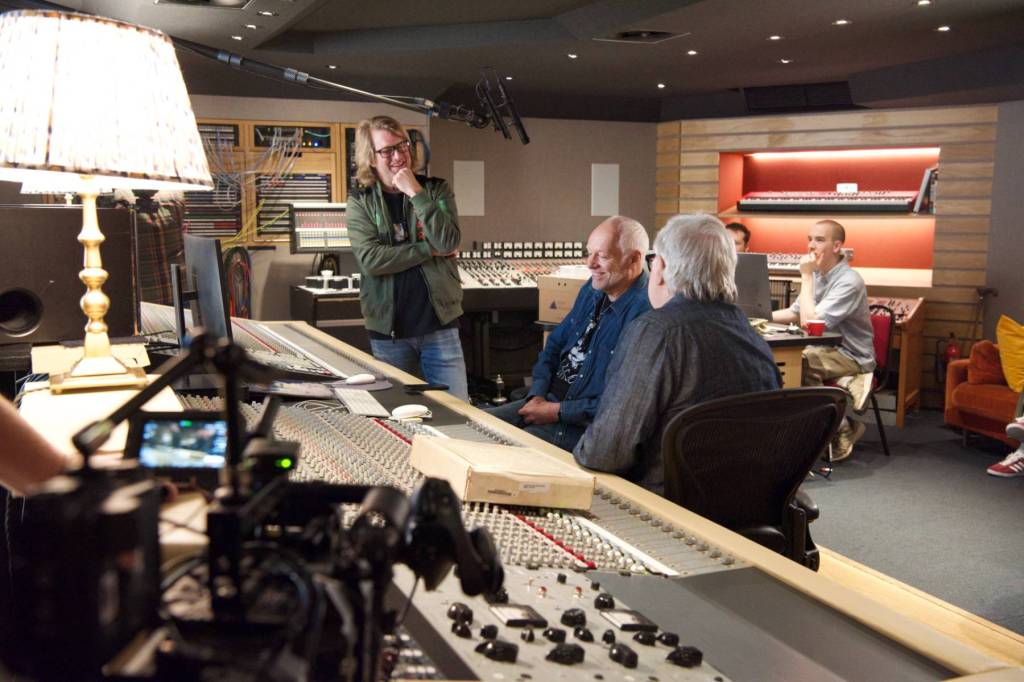
“Yeah, it all comes to roost at the same time,” Frampton, 76, sporting a denim shirt over a Tom Petty tee, tells Billboard via Zoom from Bigsby Park, his home studio at his residence in Nashville. (Bigsby, the namesake dog, stretches out on a white sofa nearby during the conversation.)
“Celebrating (Frampton Comes Alive!) was very exiting — but daunting that it’s 50 years since that thing! And then (Carry The Light) and the documentary were sort of like this,” he adds, waving his arms to indicate their parallel paths, “and then all of a sudden they aligned. We didn’t plan it; it just luckily happened that way. We were going to release the album a month earlier, but then Tribeca contacted us… so we put it back so the album would come out and two weeks later it’s Tribeca, and then we could talk about both rather than talk about one thing or the other.”
Rest assured there’s a lot to talk about in both cases.
Showing The Way
The Frampton documentary was Arthur’s brainchild, broached after Frampton began privately revealing the degenerative Inclusion Body Myositis (IBM) diagnosis that’s slowly limiting his mobility and forced him to adjust his playing style — although anybody who’s seen him live since 2019 would be hard-pressed to notice. But the prospect of Frampton stopping at some point — “I thought, ‘This is the greatest gig on the planet. What am I gonna do when Peter’s done?’,” Arthur recalls — inspired him to learn film craft and, in turn, pitch the idea of a documentary.
It began as chronicle of Frampton’s Finale — The Farewell Tour in 2019. “Peter said, ‘Why don’t you just film all the concerts?’” Arthur says with a laugh. “I’m like, OK — you do know I’m on stage? I’m the keyboard player, right?” Nevertheless, he employed three cameras to capture the onstage action and, since the gear was on the road, also filmed behind the scenes and began interviewing Frampton.
“I’m like, ‘Wow, OK, this isn’t just a concert documentary. This is a story,’” says Arthur. Frampton’s management supported the idea, and while the Covid pandemic slowed down progress, it also gave Arthur — who started the Phenix Features film company with Frampton during the pause — time to hunker down and organize the endeavor. “Luckily I was around Peter a lot,” he says. “The chemistry between the two of us… we’re friends. He liked the way he looked with me in the room, without other strangers. It’s more of a conversation. The basis of the movie is my take on him as a friend, and of course I know his legacy very well.”
Because of that relationship, Frampton adds that he was able to focus on Carry The Light, with his son Julian Frampton co-producing, while Arthur worked on the film. “I trust Rob implicitly,” he says. “I had a lot to do with it. I know everything that’s in there. But we were working on two projects at once, and I mainly concentrated on the album and wasn’t involved day to day (with Frampton). I kept seeing it every now and again, and I love the way he told the story.”
Arthur says his ultimate goal was “to tell a career retrospective” and a life story, dating back to Frampton’s upbringing in Kent, England, where his mother, whose own acting ambitions were quashed by her own mother, encouraged his artistic pursuits. Frampton even takes Frampton and his brother Clive back to Bromley Technical High School, where their father was head of the art department and where a young Frampton played guitar with upper classman David Jones (nee Bowie) and formed bands such as the Little Ravens, the Trubeats, the Preachers and Moon Train — the latter of which was managed and produced by Rolling Stones bassist Bill Wyman.
Arthur filmed Frampton playing Buddy Holly’s “Peggy Sue” on the steps at Bromley — “I almost choked up there; one of the camera girls was crying,” he remembers — as well as at Abbey Road studios, where Frampton recalls being part of George Harrison’s All Things Must Pass album. Others appearing in the film include: Wyman; the Who’s Roger Daltrey, who inducted Frampton into the Rock And Roll Hall of Fame in 2024; Ringo Starr; Herb Alpert, who signed Humble Pie and then Frampton to A&M Records during the early ’70s; Alice Cooper, one of Frampton’s co-stars in the ill-fated Sgt. Pepper’s Lonely Hearts Club Band film; Andrew Brown from Frampton’s pre-Humble Pie band the Herd; Humble Pie’s Jerry Shirley; Sheryl Crow; Heart’s Nancy Wilson; Tom Morello; Styx’s Tommy Shaw; Kate Hudson; Joe Bonamassa and others. Frampton’s first wife, Mary Lindes, provides insights. “We’ll always be lifelong friends,” he notes, as do Frampton’s three children.
There And Back Again
Frampton provided hours of Super 8 footage he shot during the ’70s, including from while he was in the hospital following a near-fatal June 1978 car crash in the Bahamas. He also gave Arthur license to explore the darker aspects of his career, including substance abuse issues and his well-chronicled fall from popularity after Frampton Comes Alive! — even having to ask Atlantic Records chief Ahmet Ertegun for a loan at one point. Frampton also entertained an inquiry from Pete Townshend about replacing him, on stage at least, in the Who.
“Nobody likes talking about failure, but that’s a big part of it,” acknowledges Frampton, who was equally candid in 2020’s Do You Feel Like I Do?: A Memoir. “I wanted people to see it’s not all glamor, I wanted to show the story all the way through — the good, the bad and the ugly. It was me baring my soul, just like I did in the book, really — it’s the same story, but different details, so it was very important to say I failed, even though (failure) doesn’t sit well with me, being a positive man in many ways.”
Arthur, meanwhile, contends that Frampton is ultimately a triumphant tale.
“One thing I have to give (Frampton) total credit for was he was very transparent. He said, ‘Put it all in there!`” Arthur says. “I said, ‘Are you sure?` I got him to talk about stuff that he’s never talked about, and I said, ‘I’m gonna use this.’ (Frampton) said, ‘I know, I know. It’s OK.’ And it turns out his life did follow this beautiful arc; he was the biggest thing in the world, and three years later he was done and the world left him. So then it’s perseverance and a triumphant last third act.
“(Frampton) just wrote me last week, ’cause he watched it again, and he said, ‘Rob, I just love this doc. It’s painful to watch at times, but I love it.’ There’s my payday right there. That’s it — success! The fact he gives me a thumbs-up is giant.”
Julian Frampton was equally moved. “It’s a phenomenal story,” he says. “A lot of people will learn some things they didn’t know about his career and his family life. I never saw a lot of that footage before; it was like a time machine, watching a 24-year-old version of your dad on the beach and stuff like that, with all that hair. It’s a great thing.”
Frampton and Arthur are hoping the Tribeca audience will feel the same way — and they’re already looking ahead to Frampton‘s life beyond the festival. “We’re looking to find a streaming home, (but) we don’t know who that’s gonna be yet,” Arthur says. “We’re gonna have to see where it leads us after Tribeca. I’ve gotten some amazing feedback from great directors who have seen it, which makes me happy. So I think we’ve got something that’s super marketable and really entertaining.”
Carrying The Light
Carry The Light, meanwhile, kept Frampton plenty busy while Arthur was putting Frampton together. The Framptons recorded the 10-track set mostly in Nashville, at Frampton’s Studio Phenix and Bigsby Park and other locations, with a rhythm section of bassist Glenn Worf and drummer Chad Cromwell. Guests include Morello on the raging “Lions at the Gate,” Crow (“Breaking the Mold”), H.E.R. on the instrumental “Islamorada” and saxophonist Bill Evans on “Can You Take Me There” and “Tinderbox.”
Graham Nash features on “I’m Sorry Elle,” inspired by Frampton’s wait to meet his granddaughter born during the height of Covid, while Benmont Tench from Tom Petty’s Heartbreakers plays keyboards on “Buried Treasure,” which takes its title from the late Petty’s SiriusXM show that Frampton enjoyed.
Frampton says the IBM diagnosis pushed him “to play as much as possible, while I still can,” which led to two covers sets — All Blues in 2019 and the instrumental Frampton Forgets the Words during 2021. But he’s been long eyeballing another set of his own compositions to follow 2010’s Thank You, Mr. Churchill. “All of the songs are either brand new or they’re within the last six years of being written,” he says, noting that he came up with the riff for the topical “Lions at the Gate” about six years ago, during a session recording “Peggy Sue” for a Buddy Holly tribute project.
The title track, meanwhile, incorporates a Shawnee stomp dance, courtesy of guitar tech Nick Gibson and his tribal family in Oklahoma, and the idea of elders passing wisdom on provided a tentpole theme for the song and the album. “The thing that upsets me right now is that we will never learn from the past,” Frampton explains. “My father and many others from the Second World War would be turning in their graves right now; they fought to get rid of (fascism) and enhance the Constitution of America and hopefully straighten out Europe a little bit — which they did. So it really angers me that we have what we have now.”
With Carry The Light Out, Frampton is already working on a next album. “There’s six tracks waiting in the wings,” Frampton says, “and I’ve already got four embryonic ideas ready for me and Julian to sit down and do the same thing again, which is exciting ’cause I get to spend more time with him.” The IBM is preventing Frampton from making tour plans at the moment, however. “It’s obviously getting more and more difficult to play,” he acknowledges, but that doesn’t diminish his determination to keep trying.
“Somebody said something like ‘he’s not just a classic rocker anymore, and if there’s ever something I would love to hear, that would be it, that I’m current,” Frampton says. “I do feel that way, because I do feel like it’s an incredible album. I don’t usually use superlatives for my own stuff, but I knew this album is good. I knew Frampton Comes Alive! was good. I knew (1972’s) Wind of Change was great. I knew (Humble Pie’s) Rockin’ the Fillmore was fantastic. (Carry The Light) is the best of the best we had. We never settled for anything less than the best we could do, and it think you can hear it.”




Comentarios